Meenakshi Jain (Set of 14 Books) : Vishwanath Rises and Rises | Rama & Ayodhya | THE BRITISH MAKEOVER OF INDIA: Judicial and Other Indigenous Institutions Upturned | THE BRITISH MAKEOVER OF INDIA: Indigenous Education and Languages Downgraded | Flight Of Deities And Rebirth Of Temples | Vasudeva Krishna And Mathura | Sati | The Hindus of Hindustan | The Battle For Rama | The India They Saw (Set Of 4) | RAJA BHOJA PARMARA
Publisher:
| Author:
| Language:
| Format:
Publisher:
Author:
Language:
Format:
₹11,750 Original price was: ₹11,750.₹8,813Current price is: ₹8,813.
In stock
Ships within:
In stock
ISBN:
Page Extent:
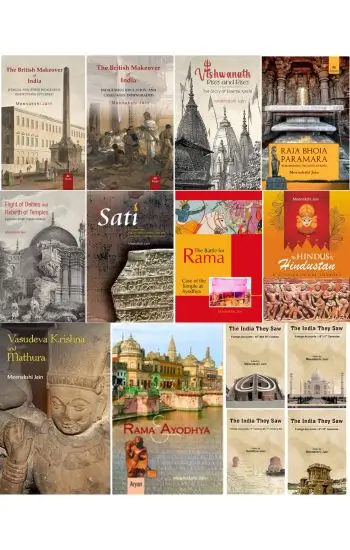
Collection of 14 Books Authored by Meenakshi Jain
Vishwanath Rises and Rises :-
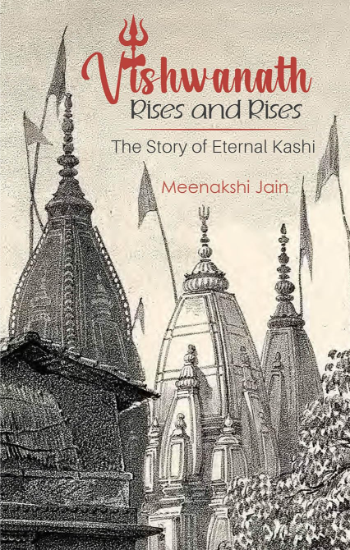
Kashi, the City of Light, has been central to Indian civilization for millennia. This book traces the history of Varanasi, its destruction under repeated invasions, and the resilience of its people in rebuilding temples despite hostile rulers. It details the significance of the Vishwanath temple, the numerous assaults it suffered, and how it continued to thrive as a center of Hindu religious and intellectual activity.Rama & Ayodhya :-
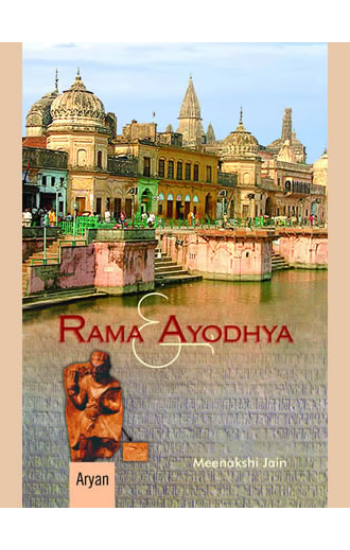
This book examines the antiquity of the Rama Katha and the historical claims regarding Ayodhya as Rama’s birthplace. It critically analyzes the arguments of Left historians who challenge the existence of a Ram temple before the Babri Masjid. Based on accounts from foreign travelers, colonial administrators, and the findings of the Archaeological Survey of India (ASI), it debunks myths and presents legal proceedings that reaffirm the temple’s historical significance.The British Makeover of India: Judicial and Other Indigenous Institutions Upturned :-
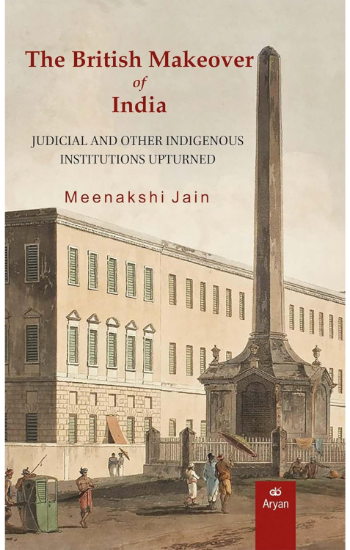
The book discusses how indigenous legal institutions functioned efficiently before British rule and how they were systematically dismantled by the colonial state. Initially, British officials admired India’s decentralized judiciary, but with increased colonial dominance, they began to replace it with Western legal institutions. The shift was driven by racial biases, European self-confidence, and the desire to “civilize” India through legal and institutional reforms.The British Makeover of India: Indigenous Education and Languages Downgraded :-
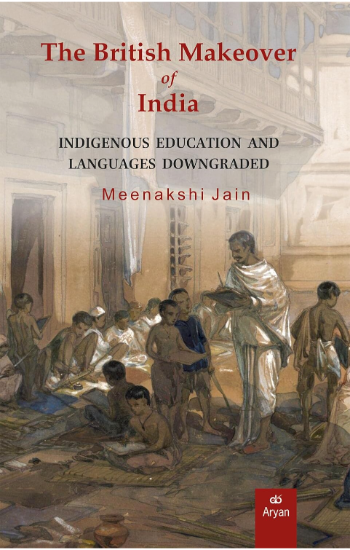
Before British rule, India had a thriving indigenous education system that was self-sufficient and widespread. This book details how British policies systematically undermined traditional education and languages. Evangelical missionaries pushed for Christianization, while Thomas Macaulay’s policies imposed English education, leading to the decline of vernacular learning. The book also covers the resistance from Indian scholars and the struggle to preserve indigenous knowledge systems.Flight of Deities and Rebirth of Temples :-
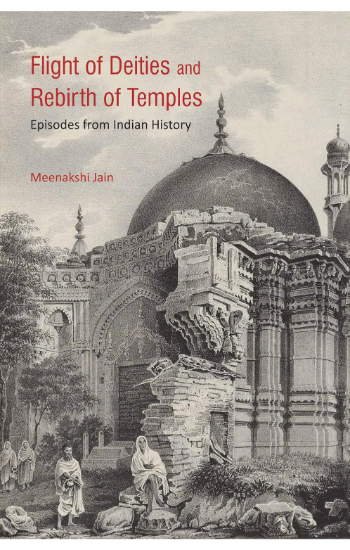
This book explores how Hindu society responded to temple destruction during medieval times. It highlights the strategic relocation of deities and the constant efforts to rebuild temples despite repeated invasions. Through case studies, it reveals the deep-rooted commitment of Hindu communities to preserving sacred spaces and their spiritual heritage.Vasudeva Krishna and Mathura :-
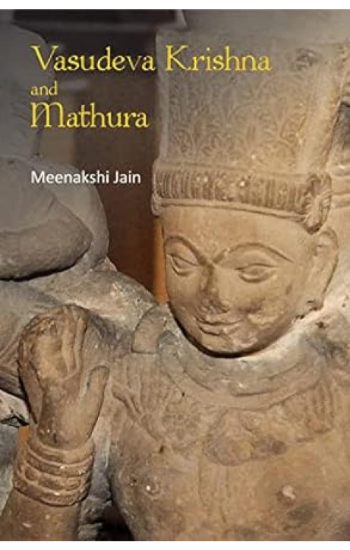
This work examines the ancient tradition of Krishna worship and the Bhagavata religion centered around Vasudeva Krishna. It focuses on the archaeological discoveries at Katra Keshavadeva in Mathura and the continuous efforts to reconstruct the Krishna temple, despite multiple instances of destruction—from Mahmud Ghaznavi to Aurangzeb. The book also documents colonial-era legal battles over the temple site.Sati :-
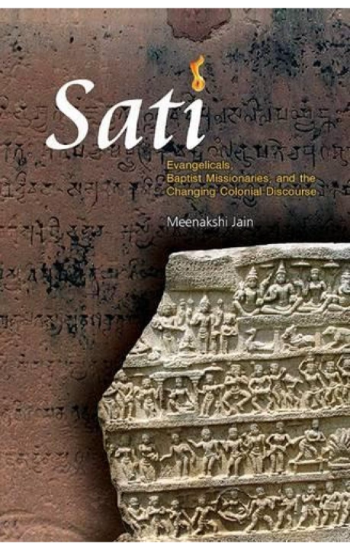
Contrary to popular colonial narratives, this book argues that sati was an extremely rare practice and not representative of Hindu tradition. It examines the role of Evangelicals and Baptist missionaries in exaggerating instances of sati to justify Christianization and Anglicization of India. The book presents historical data to debunk the myths surrounding the practice and British efforts to portray it as a widespread social evil.The Hindus of Hindustan :-
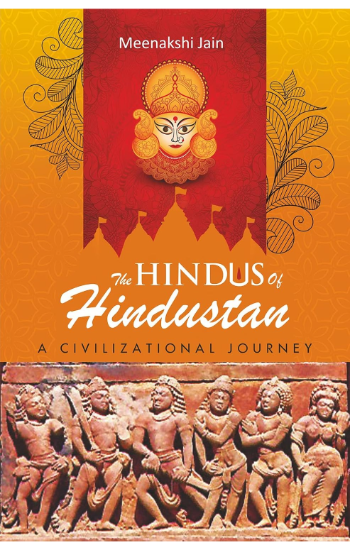
This book explores the spiritual, religious, and cultural continuity of Hindu civilization over millennia. From the Prithvi Sukta in the Atharva Veda to the Arthashastra’s vision of a united India, it traces the idea of Hindustan as a sacred land. It also documents how foreign invaders attempted to suppress indigenous traditions and how Hindu society resisted and adapted over centuries.The Battle for Rama :-
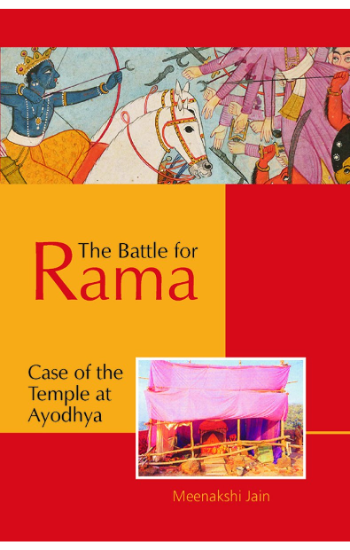
For decades, Left historians have challenged the claim that a Hindu temple stood at the site of the Babri Masjid. This book exposes the inconsistencies in their arguments, using evidence from foreign travelers, colonial revenue records, and ASI excavations. It highlights the unwavering Hindu commitment to the site and how legal proceedings ultimately affirmed the presence of a temple beneath the Babri Masjid.The India They Saw (Set of 4 Volumes) :-
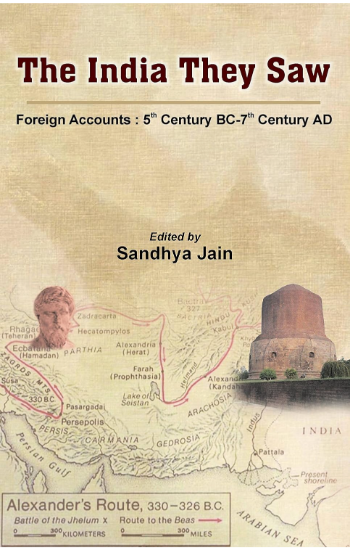
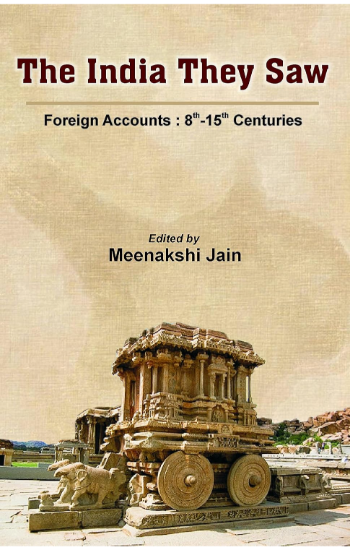
This comprehensive work compiles the accounts of foreign travelers who visited India between the 5th century BCE and the 19th century CE. The volumes document their observations on India’s spiritual traditions, social harmony, and economic prosperity:
- Vol. 1: Ancient accounts up to the rise of Islam.
- Vol. 2: European travelers from the 16th and 17th centuries.
- Vol. 3: Arab travelers and geographers.
- Vol. 4: European travelers during colonial rule.
11. RAJA BHOJA PARMARA : –
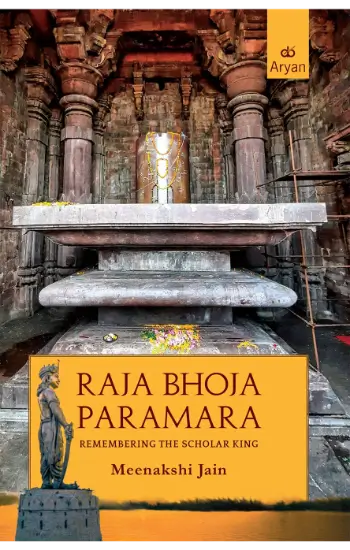
Raja Bhoja ranks among the great rulers of India. Besides his military prowess, he was renowned for the extraordinary construction works he sponsored and the authoritative texts and treatises he authored.
His most celebrated architectural contribution is the Bhojashala at Dhar (Madhya Pradesh). Built as a religious/educational centre in the 11th century, it was converted into the Kamal Maula mosque in the 13th century. Several officials of the British Government confirmed the popular belief that the Kamal Maula mosque occupied the site of Bhojashala.
In May 2022, a petition by the Hindu Front for Justice demanded that the Bhojashala site be handed over to Hindus. On 11th March 2024, the Madhya Pradesh High Court directed the Archaeological Survey of India to conduct a ‘scientific survey’ of the Bhojashala/Kamal Maula mosque complex. On 1st April 2024, the Supreme Court refused to halt ‘scientific survey’ of the complex, but advised that no physical excavations were to be undertaken that could alter the character of the premises.
In its Report, the ASI concluded there was evidence of a structure constructed by Raja Bhoja. The Kamal Maula mosque was built from parts of earlier temples, and came up some centuries after the Bhojashala.
Some other remarkable structures credited to Raja Bhoja include the Bhojeshwar temple and Bhojpur lake. So immense was the contribution of this Paramara ruler that the city of Bhopal (Bhojpal) was named after him.

Reviews
Collection of 14 Books Authored by Meenakshi Jain
Vishwanath Rises and Rises :-
Kashi, the City of Light, has been central to Indian civilization for millennia. This book traces the history of Varanasi, its destruction under repeated invasions, and the resilience of its people in rebuilding temples despite hostile rulers. It details the significance of the Vishwanath temple, the numerous assaults it suffered, and how it continued to thrive as a center of Hindu religious and intellectual activity.Rama & Ayodhya :-
This book examines the antiquity of the Rama Katha and the historical claims regarding Ayodhya as Rama’s birthplace. It critically analyzes the arguments of Left historians who challenge the existence of a Ram temple before the Babri Masjid. Based on accounts from foreign travelers, colonial administrators, and the findings of the Archaeological Survey of India (ASI), it debunks myths and presents legal proceedings that reaffirm the temple’s historical significance.The British Makeover of India: Judicial and Other Indigenous Institutions Upturned :-
The book discusses how indigenous legal institutions functioned efficiently before British rule and how they were systematically dismantled by the colonial state. Initially, British officials admired India’s decentralized judiciary, but with increased colonial dominance, they began to replace it with Western legal institutions. The shift was driven by racial biases, European self-confidence, and the desire to “civilize” India through legal and institutional reforms.The British Makeover of India: Indigenous Education and Languages Downgraded :-
Before British rule, India had a thriving indigenous education system that was self-sufficient and widespread. This book details how British policies systematically undermined traditional education and languages. Evangelical missionaries pushed for Christianization, while Thomas Macaulay’s policies imposed English education, leading to the decline of vernacular learning. The book also covers the resistance from Indian scholars and the struggle to preserve indigenous knowledge systems.Flight of Deities and Rebirth of Temples :-
This book explores how Hindu society responded to temple destruction during medieval times. It highlights the strategic relocation of deities and the constant efforts to rebuild temples despite repeated invasions. Through case studies, it reveals the deep-rooted commitment of Hindu communities to preserving sacred spaces and their spiritual heritage.Vasudeva Krishna and Mathura :-
This work examines the ancient tradition of Krishna worship and the Bhagavata religion centered around Vasudeva Krishna. It focuses on the archaeological discoveries at Katra Keshavadeva in Mathura and the continuous efforts to reconstruct the Krishna temple, despite multiple instances of destruction—from Mahmud Ghaznavi to Aurangzeb. The book also documents colonial-era legal battles over the temple site.Sati :-
Contrary to popular colonial narratives, this book argues that sati was an extremely rare practice and not representative of Hindu tradition. It examines the role of Evangelicals and Baptist missionaries in exaggerating instances of sati to justify Christianization and Anglicization of India. The book presents historical data to debunk the myths surrounding the practice and British efforts to portray it as a widespread social evil.The Hindus of Hindustan :-
This book explores the spiritual, religious, and cultural continuity of Hindu civilization over millennia. From the Prithvi Sukta in the Atharva Veda to the Arthashastra’s vision of a united India, it traces the idea of Hindustan as a sacred land. It also documents how foreign invaders attempted to suppress indigenous traditions and how Hindu society resisted and adapted over centuries.The Battle for Rama :-
For decades, Left historians have challenged the claim that a Hindu temple stood at the site of the Babri Masjid. This book exposes the inconsistencies in their arguments, using evidence from foreign travelers, colonial revenue records, and ASI excavations. It highlights the unwavering Hindu commitment to the site and how legal proceedings ultimately affirmed the presence of a temple beneath the Babri Masjid.The India They Saw (Set of 4 Volumes) :-
This comprehensive work compiles the accounts of foreign travelers who visited India between the 5th century BCE and the 19th century CE. The volumes document their observations on India’s spiritual traditions, social harmony, and economic prosperity:
- Vol. 1: Ancient accounts up to the rise of Islam.
- Vol. 2: European travelers from the 16th and 17th centuries.
- Vol. 3: Arab travelers and geographers.
- Vol. 4: European travelers during colonial rule.
11. RAJA BHOJA PARMARA : –
Raja Bhoja ranks among the great rulers of India. Besides his military prowess, he was renowned for the extraordinary construction works he sponsored and the authoritative texts and treatises he authored.
His most celebrated architectural contribution is the Bhojashala at Dhar (Madhya Pradesh). Built as a religious/educational centre in the 11th century, it was converted into the Kamal Maula mosque in the 13th century. Several officials of the British Government confirmed the popular belief that the Kamal Maula mosque occupied the site of Bhojashala.
In May 2022, a petition by the Hindu Front for Justice demanded that the Bhojashala site be handed over to Hindus. On 11th March 2024, the Madhya Pradesh High Court directed the Archaeological Survey of India to conduct a ‘scientific survey’ of the Bhojashala/Kamal Maula mosque complex. On 1st April 2024, the Supreme Court refused to halt ‘scientific survey’ of the complex, but advised that no physical excavations were to be undertaken that could alter the character of the premises.
In its Report, the ASI concluded there was evidence of a structure constructed by Raja Bhoja. The Kamal Maula mosque was built from parts of earlier temples, and came up some centuries after the Bhojashala.
Some other remarkable structures credited to Raja Bhoja include the Bhojeshwar temple and Bhojpur lake. So immense was the contribution of this Paramara ruler that the city of Bhopal (Bhojpal) was named after him.
About Author
Reviews

Atul mishra –
Ise हिन्दी me bhi prakashit करिये

Atul mishra –
Ise हिन्दी me bhi prakashit करिये