Kumbh Mela Ephemeral Mega City
Publisher:
| Author:
| Language:
| Format:
Publisher:
Author:
Language:
Format:
₹2,500 Original price was: ₹2,500.₹1,875Current price is: ₹1,875.
In stock
Ships within:
In stock
ISBN:
Page Extent:
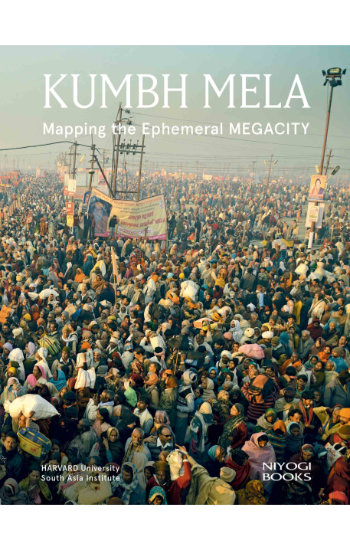
The volume presents the comprehensive research findings and includes city maps, aerial images,
analytical drawings and photographs of this spectacular Ephemeral Mega City for the Kumbh Mela.
Kumbh Mela is the largest religious celebration on earth and the biggest public gathering in the world.
The resulting settlement is a virtual mega city!
The Kumbh Mela deploys its own roads, pontoon bridges as well as tents serving as residences and
venues for spiritual meetings, and social infrastructure such as hospitals, sanitation outlets,
and vaccination clinics—all replicating the functions of an actual city.
The pop-up settlement seamlessly serves up to seven million people who gather for 55 days
and an additional flux of 10 to 20 million people
who come for 24-hour cycles on the six main bathing dates.
In 2013, a team from Harvard University, representing faculty from multiple disciplines,
researched the large-scale event from its preparation to the actual celebration itself.
This was the first systematic study on the Mela as a City: a planned entity
and covers issues of social inclusion, diversity, and even democracy that emerge under the framework
of a neutralizing grid of roads that is the organizing armature of the city.
This subdivision of the city forms clusters of freedom and facilitates space for individual and group expression

The volume presents the comprehensive research findings and includes city maps, aerial images,
analytical drawings and photographs of this spectacular Ephemeral Mega City for the Kumbh Mela.
Kumbh Mela is the largest religious celebration on earth and the biggest public gathering in the world.
The resulting settlement is a virtual mega city!
The Kumbh Mela deploys its own roads, pontoon bridges as well as tents serving as residences and
venues for spiritual meetings, and social infrastructure such as hospitals, sanitation outlets,
and vaccination clinics—all replicating the functions of an actual city.
The pop-up settlement seamlessly serves up to seven million people who gather for 55 days
and an additional flux of 10 to 20 million people
who come for 24-hour cycles on the six main bathing dates.
In 2013, a team from Harvard University, representing faculty from multiple disciplines,
researched the large-scale event from its preparation to the actual celebration itself.
This was the first systematic study on the Mela as a City: a planned entity
and covers issues of social inclusion, diversity, and even democracy that emerge under the framework
of a neutralizing grid of roads that is the organizing armature of the city.
This subdivision of the city forms clusters of freedom and facilitates space for individual and group expression
About Author
Reviews
There are no reviews yet.

Reviews
There are no reviews yet.