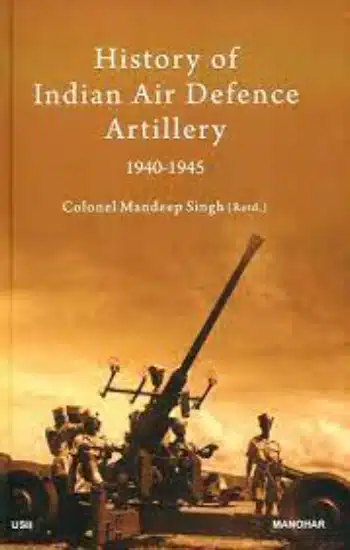
History of Indian Air Defence Artillery 1940-1945
Publisher:
| Author:
| Language:
| Format:
Publisher:
Author:
Language:
Format:
₹1,495 Original price was: ₹1,495.₹1,196Current price is: ₹1,196.
In stock
Ships within:
In stock
ISBN:
Page Extent:
In 1921, the eighth Anti-Aircraft Battery of Royal Artillery was first stationed in India. However, it was only after two decades that the threat from the Japanese expansionism made India to finally realise how ill-prepared its anti-aircraft defences were. Starting from a Battery raised at Colaba, Indian Anti-Aircraft Artillery soon expanded to over thirty- four regiments for India to have the second largest concentration of Anti-Aircraft defences outside the Great Britain. At one time, India had more Anti-Aircraft?Regiments?than?that?of?field?artillery. Numbers aside, Indian Anti-Aircraft gunners served in varied battleÂfields with honour, both during defeat and victory. If they were at SingaÂpore as the fortress fell, they kept the Japanese Air Force at bay when Allied forces retreated from Burma, and later formed part of the vanÂguard?when?the?Allies?returned?to?Burma?in?triumph. Indian Anti-Aircraft Regiments served in Singapore, Malaya, Burma, Maldives, Aden and Iraq. They were truly representative as all regiÂments comprised of varied races and castes. It had a separate training centre for women and was one of the first to enlist women when the WAC(I) manned its operation rooms and drove lorries. They defended key installations, protected cities, served with field formations, participaÂted in amphibious operations, served at remote locations facing odds and?administrative?apathies. About the Author Col Mandeep Singh was commissioned in Air Defence Artillery in 1982, and commanded an Air Defence Group. Singh writes regularly for defence journals on air defence and aerospace matters. He has authored four books on air defence and this book is his first research project?with?the?USI,?New?Delhi.

About Author
Reviews
There are no reviews yet.

Reviews
There are no reviews yet.