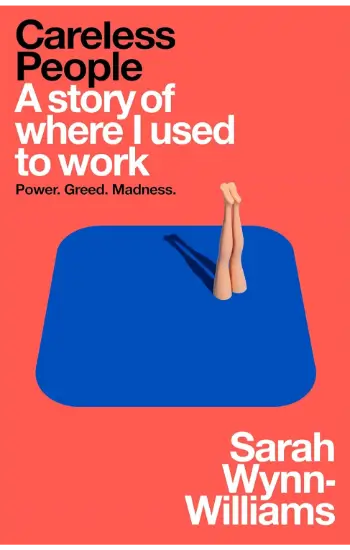
Description
Shocking and darkly funny, Careless People gives you a front-row seat to the decisions that are shaping our world and the people who make them. Welcome to Facebook. Sarah Wynn-Williams, a young diplomat from New Zealand, pitched for her dream job. She saw Facebook’s potential and knew it could change the world for the better. But, when she got there and rose to its top ranks, things turned out a little different. From wild schemes cooked up on private jets to risking prison abroad, Careless People exposes both the personal and political fallout when boundless power and a rotten culture take hold. In a gripping and often absurd narrative, Wynn-Williams rubs shoulders with Mark Zuckerberg, Sheryl Sandberg and world leaders, revealing what really goes on among the global elite – and the consequences this has for all of us. Candid and entertaining, this is an intimate memoir set amid powerful forces. As all our lives are upended by technology and those who control it, Careless People will change how you see the world.



karthikgovil –
Sarah Wynn-Williams writes a gossipy memoir, a snitch’s tale, on her time at Facebook, exposing some of the dirtiest practices of her Big Tech company in the process.
The book is written very autobiographically, which may take away some of the weight of the serious allegations, but it also adds a certain human charm to the book. The manipulative, power hungry and malevolent big tech oligarchs are not lizard people, but humans just like us.
The snitch in question, Sarah Wynn-Williams, comes off as weak and helpless – as snitches often do. But what she is snitching against is so much bigger than herself. The shame around snitching in popular culture is exactly what enables the power hungry megalomaniacs, whether at work or at big tech conglomerates, to continue their abusive behaviour and avoid taking responsibility. It is refreshing to see the snitch perspective, because one doesn’t know how to grapple monopolistic mailmen; a first in history.
There is some posturing of politics by Sarah Wynn-Williams too, like her portrayal of the Feminist Fight Club as the “objective good guys”, when it is a fact that before and after Trump’s elections, genuinely conservative content was being removed, and artificial intelligence algorithms were being used to remove them instead of a human review (which deleted many human expressions of conservative longings in the process). The liberal side is not wholly innocent either, and such things are down to personal choice and socio-economic realities at the end of the day. No policy (except maybe economic policy) can save the people from debauchery, or from feeling trapped.
The same I felt about her defence of George Soros, who has been involved in spreading western-centric ideals across the world.
When it comes to content moderation, sadly, no robot can fix it, and it needs human verification and that human verification needs to be ideologically devoid. For that, both conservatives and liberals have to put their differences from their personal lives aside and come together for the greater good.
But let’s not pretend that such problems have the solutions already known. Consensus isn’t there, and so people fall to their base identity politics, based on their lifestyle and birth and personality identity, and not something for the greater good.
The narrative choice of writing as the snitch, the insider, the bystander – it helps humanize the narrative, and helps make all the problems society is facing as real and humanly tangible, even if it seems to whitewash some of the author’s guilt in participation.
And from what I’ve heard, their work profile after leaving Facebook has been very much to fix society, and that alone is their true redemption arc. To bring down the big tech and to regulate it. To ensure laws in place exist to make communication between people easier and the world a better place. To make those speech regulations which already exist, apply to social media. No algorithm promoting good or evil to us. Those should be licensed only for advertisers who declare they’re advertising.
I may have my own views on this, and I’ll save it for a non-review. However, the author’s redemption arc is clearly ongoing, and they’ve chosen to bravely speak up against big tech. This is good. Her narrative style of the snitch may make them more innocent (there is a lack of mens rea, of course), but it works in this narrative of the rich and powerful, and it captures the emotions of feeling left behind simply because one does not want to partake in shallow behaviour of the herd or the organization. The fish rots from the head, but the good organs are used for organ transplant to save the lucky and underprivileged.
Of course, we all hope the ship is at it’s end for big tech. Gen Z’s entire childhood was a lie, ruined by some algorithms. For us, it’s a lot more personal to overthrow these debauched rulers, with their feminist women and fascist men. There is no ideology in overthrowing them; there is only personal experience, wrongs done to us which someone has to correct. Childhoods stolen by gore videos and cyber bullying and going viral, all of which with nobody to answer for except for the platforms we saw it on. Who got richer while we remained poor fighting our own demons. Our parents opinions hardened and our lives rewritten, all because the algorithm pushes what we hate and love about ourselves to us 24/7 at the most foundational age of ours; instead of letting the focus remain on the bland and banal, a normal childhood, a boring adulthood, without any celebration of that banality.
And that’s exactly why this narrative works so well. It may not be the most factual or data driven work against big tech (that is saved for the testimony against Facebook given in courts by the author). It works because it starts a conversation. It triggers people who hate snitches. It makes those who feel down feel like they’re not alone. And in that process, it gets a lot of the ugliest facts about modern oligarchs to the forefront. And that’s exactly how these oligarchs will also be remembered, like Rockefeller or the 500 of the Chola empire. With as much pomp and celebration of European power as of disgust and anger of those oppressed by careless people.
And that’s how history repeats. We can only be caught fighting on the right side, against the same careless people. Nothing else is in our power.
I’d personally prefer a more fact based narrative, but it is too soon for that, let’s face it.
8/10